Identity
Which asset, party, policy, loan, model and position—at the relevant date.

A consequence chain is an evidence-bearing account of what follows from an event or proposed action. It preserves identity, state, transition, valuation, uncertainty, decision and outcome.
The chain preserves causal and contractual structure as information moves between specialist models and institutional systems.
Investment pressure can create capital constraint. Capital constraint can defer maintenance. Deferred maintenance changes equipment state and makes a later failure more likely. Consequence is often a loop, not a line.
Building software sees condition. Insurers see policy response. Lenders see coverage and collateral. Structured-finance systems see cash flow. Investment systems see positions and portfolios.
Kindynos preserves the relationships among these perspectives so that each system contributes to one inspectable consequence chain.
Each element answers a different challenge to the result.
Which asset, party, policy, loan, model and position—at the relevant date.
History, conditions, contracts, prior shocks and decisions already in force.
The observed change or proposed intervention being evaluated.
The mechanism that changes operational, contractual or financial state.
The measure relevant to each stakeholder: cost, claim, cash flow, exposure or utility.
The data, model, contract, rule and assumption behind each result.
Ranges, disputed facts, alternative causes and unresolved branches.
Alternative interventions and how each changes the downstream path.
What later occurred, allowing assumptions and models to be tested.
The structure becomes useful when it can be interrogated, recomputed and challenged.
Follow an event from trigger to final exposure.
Isolate one party, instrument, period or causal route.
Compare causes, interpretations or interventions.
Place policies, choices or regimes side by side.
Connect chains through a shared asset, party or contract.
Start with a loss and identify candidate upstream causes.
Change a decision and recompute what follows.
Reproduce a bounded chain under pinned versions.
Summarize without losing access to underlying evidence.
Name valued, inferred, disputed and unresolved links.
Identify the missing fact that most improves the decision.
Produce an evidence package for review or governance.
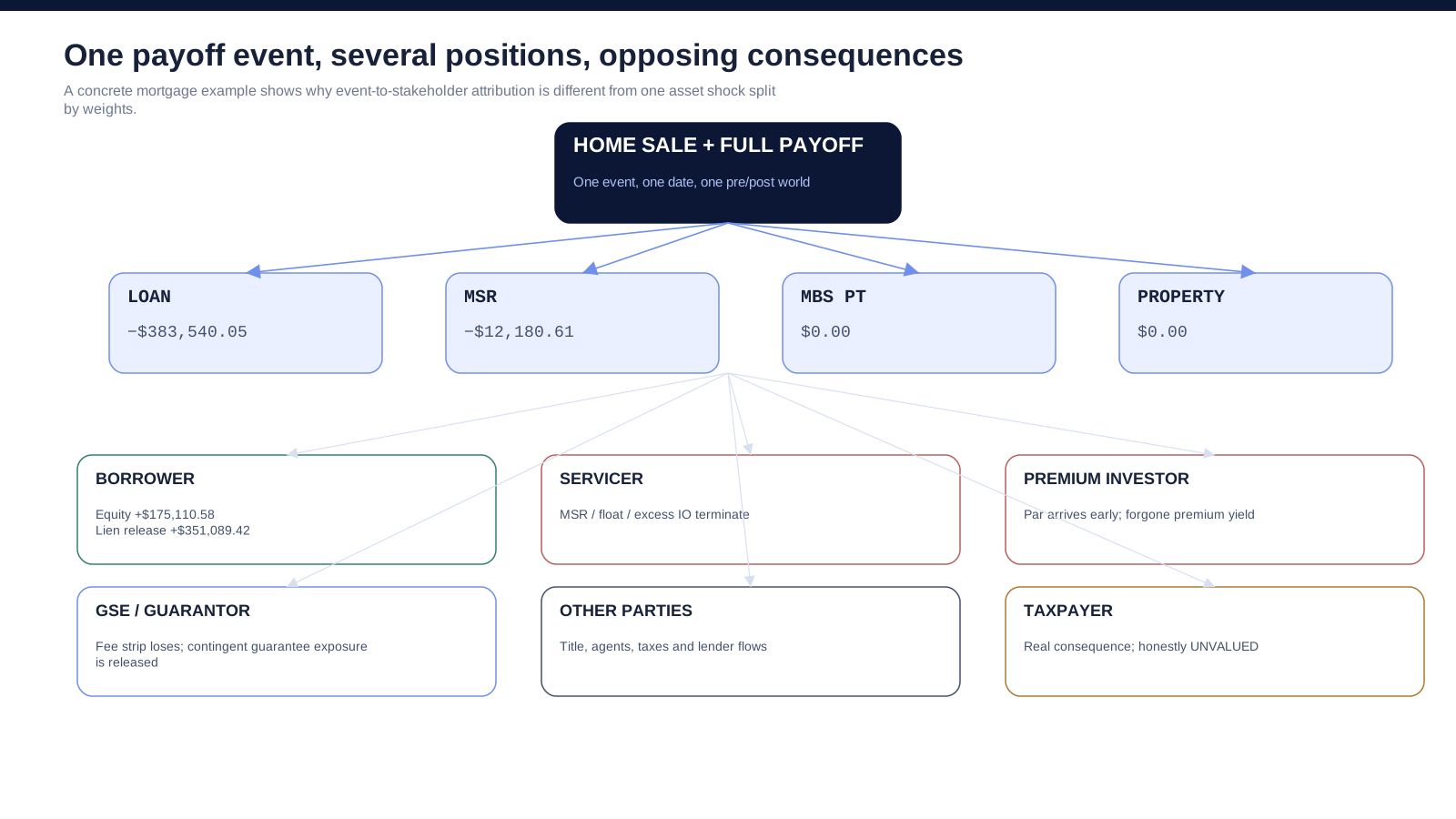
A home sale and mortgage payoff may release a borrower obligation, end a servicer fee stream, affect premium and discount investors differently, and alter guarantor exposure. One asset delta cannot stand in for all positions.
Describe the event, decision, affected systems and evidence currently available. A useful first engagement can be tightly bounded around one consequential path.