What changed?
Represent the event in the identity, state, contract and time in which it actually occurs.

Kindynos computes what follows when an event or proposed action changes assets, operations, contracts, positions, stakeholders and decisions—preserving who bears what, why, and on what evidence.
A component model may be excellent. The failure often occurs when information crosses from one institutional system into another and loses its causal, contractual or evidentiary meaning.
Represent the event in the identity, state, contract and time in which it actually occurs.
Keep asset, stakeholder and position consequences separate rather than collapsing them into one score.
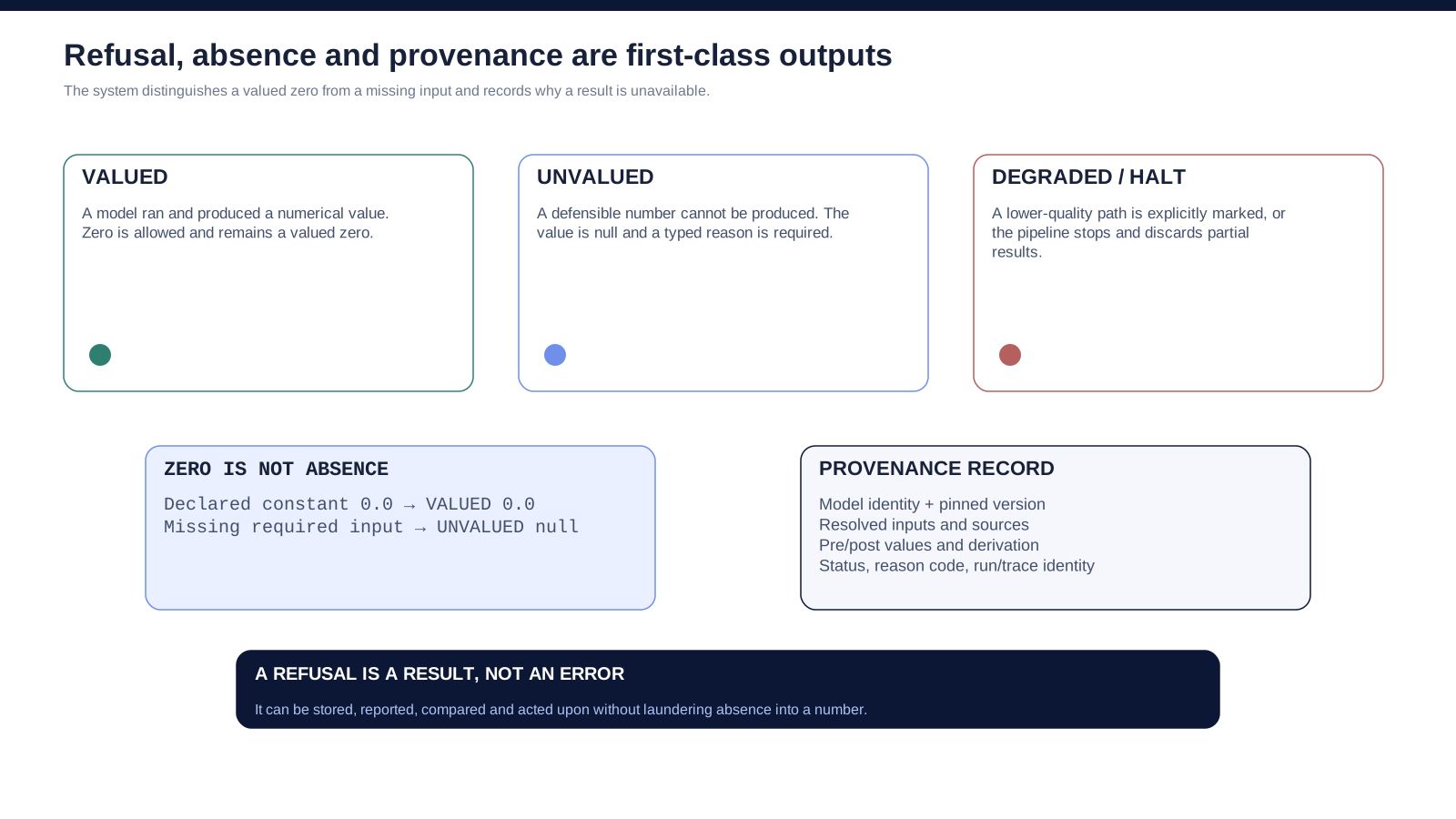
Carry models, inputs, assumptions, state and source evidence with the conclusion—or refuse.
The consequence is the difference—not a generic severity score multiplied by exposure.
Positions, contracts, conditions, history and model versions.
Resolve applicable models and inputs for each affected position.
Stakeholder-specific values, unresolved branches, evidence and next decisions.
Forward scenarios, stress, accumulation, dependence and state-conditioned consequence.
Backward attribution, alternative causes, contract response and evidence classification.
Valuation, exposure, financing, concentration, sensitivity and portfolio consequence.
Explicit alternatives, interacting parties, interventions and path-dependent outcomes.
Four application faces expose a common ambition: turn represented worlds and governed consequences into useful work.
Apply events, inspect stakeholder consequence, investigate paths and work across authored worlds.
KAILA · ConnectBring structured domain intelligence and governed analysis into conversational and connected surfaces.
CSUITE · RehearsePlace people inside consequential situations and compare choices against reactive actors and changing state.
STAR · CommunicateTranslate governed analysis into structured explanations, reports and communication artifacts.
A defensible analytical system must distinguish a real zero from missing information—and missing information from a named refusal.
Mortgage and housing provided the original proving ground for Kindynos. The architecture has since expanded across equities, insurance, buildings, DeFi, public policy and other consequential domains—combining domain-specific assets, stakeholders, events, contracts and models with reusable capabilities for valuation, attribution, propagation, forensics, investment analysis and decision support.
Positions, financing, margin, counterparties, mandates and portfolio exposures.
Operating state continued through leases, claims, property economics, loans and investors.
Collateral events continued through loan, pool, tranche, servicer, insurer and holder cash flows.
Kindynos is seeking serious conversations with prospective design partners, users, collaborators and sponsors who have a consequence problem that current functional systems do not resolve end to end.